Pilot Training in Chicago vs Northwest Indiana: Commute, Costs, and Airspace Compared
If you live in the Chicago metropolitan area and dream of earning your wings, your initial instinct is probably to search for pilot training in Chicago IL right near the city. You picture a quick drive to a local suburban airfield, stepping into a cockpit after work, and taking off into the sunset.
Yet when aspiring aviators across Cook County and the surrounding suburbs begin visiting local flight lines, a hidden logistical bottleneck often emerges. Between dense Class B airspace corridors, lengthy taxi queues behind corporate jets, and steep aircraft rental rates, earning your Private Pilot Certificate inside the immediate Chicago basin can quickly become slower and far more expensive than you planned.
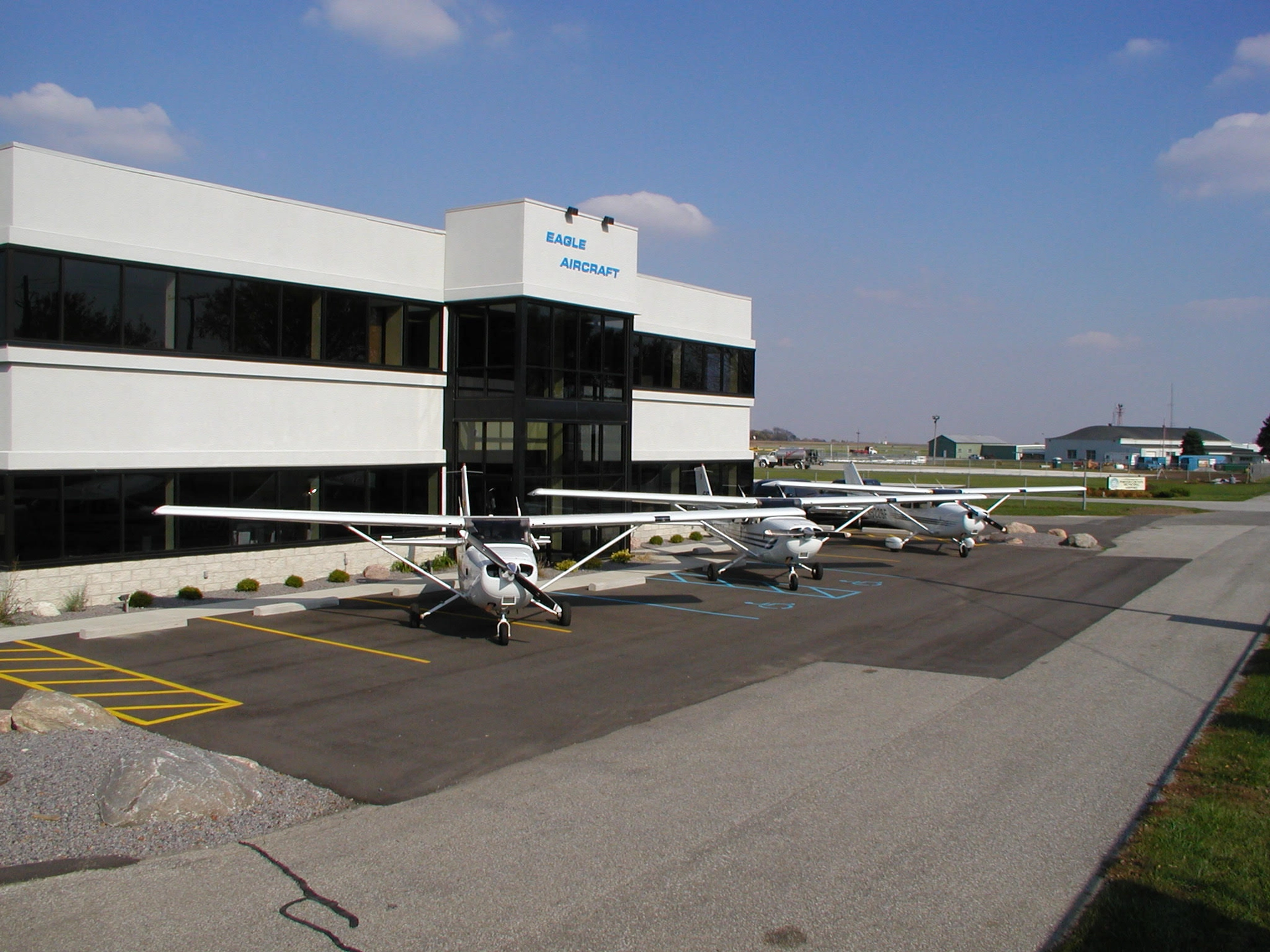
At Eagle Aircraft Flight Academy, we train dozens of students who commute from downtown Chicago and the south suburbs out to our home base at Porter County Regional Airport (KVPZ) in Valparaiso, Indiana. When you look closely at the actual math behind flight training hours, commute times, and airspace delays, making that short trip across the state line often saves you thousands of dollars while getting you to your checkride months sooner.
The Real Cost of Chicago Airspace Congestion on Your Logbook
Flight training is billed primarily by the hobbs meter reading, a device that records the exact time the aircraft engine runs from startup to shutdown. Every tenth of an hour ticking on that meter costs you money for both aircraft rental and your Certified Flight Instructor (CFI).
At congested satellite airports around Chicago, the reality of heavy local air traffic hits you before your wheels ever leave the pavement:
- Ground Delays and Holding Lines: Waiting on taxiways for clearance while busy executive traffic and regional charter flights depart burns valuable paid training time. It is not uncommon for students at busy Illinois airports to burn 0.3 to 0.5 hobbs hours just taxiing, waiting for tower release, and performing engine run-ups.
- Airspace Restrictions: Under Chicago’s Class Bravo airspace, air traffic control frequently steps student pilots down, vectors them away from arrival corridors, or requires circuitous routes just to reach an open practice area.
- Flight Time Efficiency: When you pay for a two-hour block at a congested field, you might only log 0.8 hours of actual maneuver practice in the practice area, with the remaining time spent idling on the ramp or maneuvering through complex airspace transitions.
At Porter County Regional Airport (KVPZ), the overall training efficiency looks completely different. Operating outside the restrictive surface rings of Chicago’s Class B airspace, our students complete their preflight inspections, start their engines, taxi cleanly to the runway, and get airborne with minimal waiting. Over the course of a 40- to 60-hour Private Pilot training program, eliminating just 15 to 20 minutes of ground delay per flight directly saves you 10 to 15 hours of paid engine runtime, translating into $2,500 to $4,000 in direct savings.
Breaking Down the Door-to-Door Chicago Commute
The biggest initial hesitation students express about training in Northwest Indiana is the driving distance from home. Can you realistically balance flight training in Valparaiso with a busy Chicago schedule?
For residents throughout Chicago’s Loop, South Side, and southern or eastern suburbs, the interstate highway commute is surprisingly straightforward:
- Highway Access via I-90 and I-94: From downtown Chicago or neighborhoods like Hyde Park, Bronzeville, and South Loop, taking the Chicago Skyway (I-90 E) or I-94 E typically brings you to our ramp in 50 to 60 minutes.
- South Suburban Advantage: If you live in towns like Orland Park, Tinley Park, Flossmoor, or Lansing, your drive to KVPZ is often shorter or equal in driving time compared to fighting crosstown traffic up to DuPage or Chicago Executive Airport in Wheeling.
- South Shore Line Transit: Some of our students take the South Shore Line commuter rail directly from Millennium Station to nearby stations, coordinating their arrival with training blocks.
When you factor in that you will not spend 30 minutes sitting in a running airplane waiting for clearance on the taxiway, your total door-to-door time investment is often virtually identical, with far more of that time spent actively flying.
Fleet Quality and Hourly Rates: Cessna 172s and Modern Tecnam Aircraft
Cost per flight hour is another major driver for students seeking flight training near Chicago. High commercial real estate leases and heavy municipal taxes at Illinois airports push hourly aircraft rental rates significantly higher.
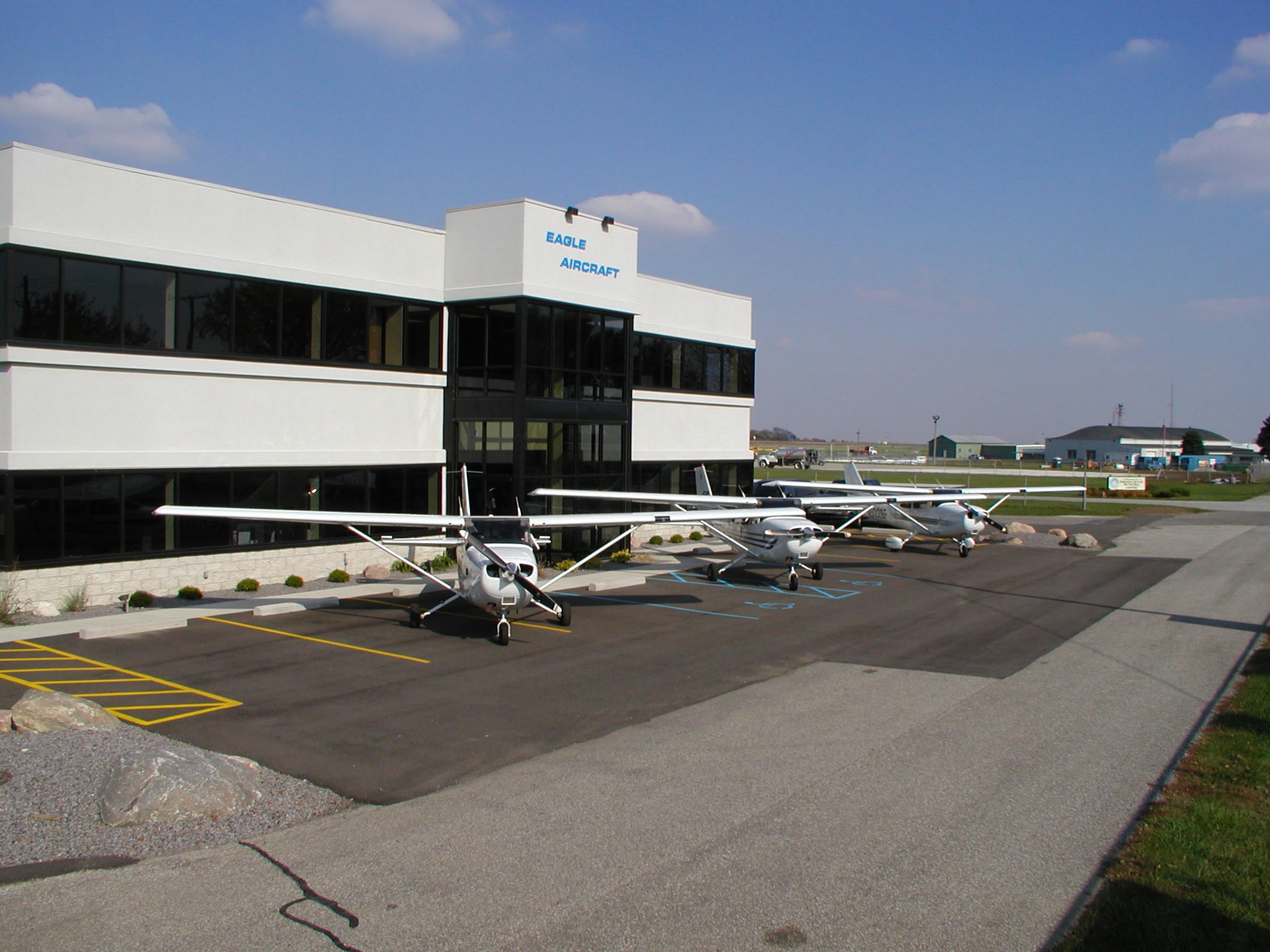
At Eagle Aircraft, our students benefit from transparent flight school pricing backed by a modern, well-maintained training fleet:
- Garmin-Equipped Cessna 172 Fleet: The proven backbone of American flight training, equipped with reliable instrumentation and modern Garmin avionics for intuitive situational awareness.
- Fuel-Efficient Tecnam Aircraft: Modern composite airframes and Rotax powerplants that lower operating costs while providing exceptional handling and modern cockpit visibility.
- On-Site FAA Part 141 Curriculum: Structured training syllabi in our private pilot certificate program that keep your lessons organized, predictable, and focused on clear stage-check milestones.
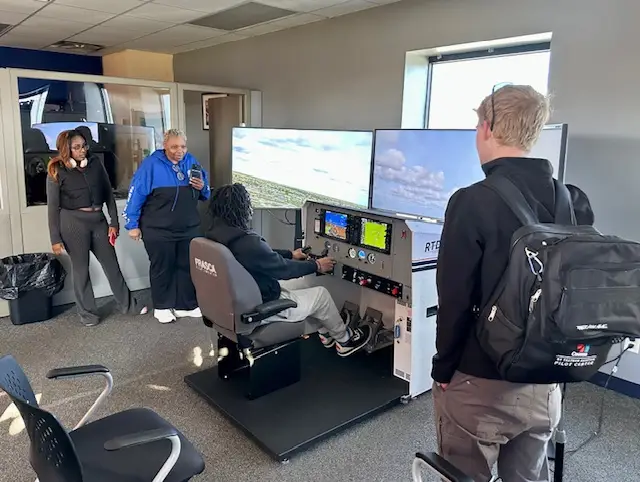
- Elite PI-1000 Advanced Simulator: Our FAA-approved flight training device lets you practice instrument scans, emergency procedures, and navigation without burning aviation fuel.
If you are researching the overall financial commitment, our detailed Chicago flight school cost breakdown provides a deep look at syllabus requirements and equipment budgets.
Training Freedom in Uncongested Practice Areas
Mastering basic aircraft control requires dedicated mental focus. When you are learning your first steep turns, slow flight, and power-off stalls, the last thing you need is constant radio interruptions from high-speed commercial traffic forcing you to abandon a maneuver mid-flight.
Flying out of KVPZ gives you immediate access to open airspace across Northwest Indiana:
- Uncluttered Airspace: You can focus 100% of your attention on your airspeed, pitch attitude, and outside visual references rather than worrying about jet traffic descending overhead.
- Multiple Runway Configurations: KVPZ features two large runways (Runway 9/27 at 7,001 feet and Runway 18/36 at 4,001 feet), giving students ample runway length and regular opportunities to practice safe crosswind techniques under instructor supervision.
- Smooth Transition to Complex Airspace: Because Chicago’s Class B, C, and D airspaces are just a short flight to the northwest, we introduce you to busy towered operations, radar flight following, and complex airspace on your schedule, once your basic airmanship is rock solid.
For a comprehensive evaluation of lesson formats and course styles before starting, read our guide to choosing flying classes in Chicago to evaluate flight school options across the region.
Schedule Your Hands-On Trial Flight at KVPZ
Choosing where to train as a pilot is one of the most consequential decisions you will make in your aviation journey. The right flight academy provides the aircraft availability, instructor mentorship, and efficient operating environment necessary to help you finish your rating without unnecessary delays or bloated invoices.
The best way to experience the difference for yourself is to come fly with our team. When you schedule an introductory discovery flight, you will take the controls of a real training aircraft alongside an FAA-certified instructor, experience our local airspace firsthand, and see why so many Chicagoland students make Eagle Aircraft their training home.